
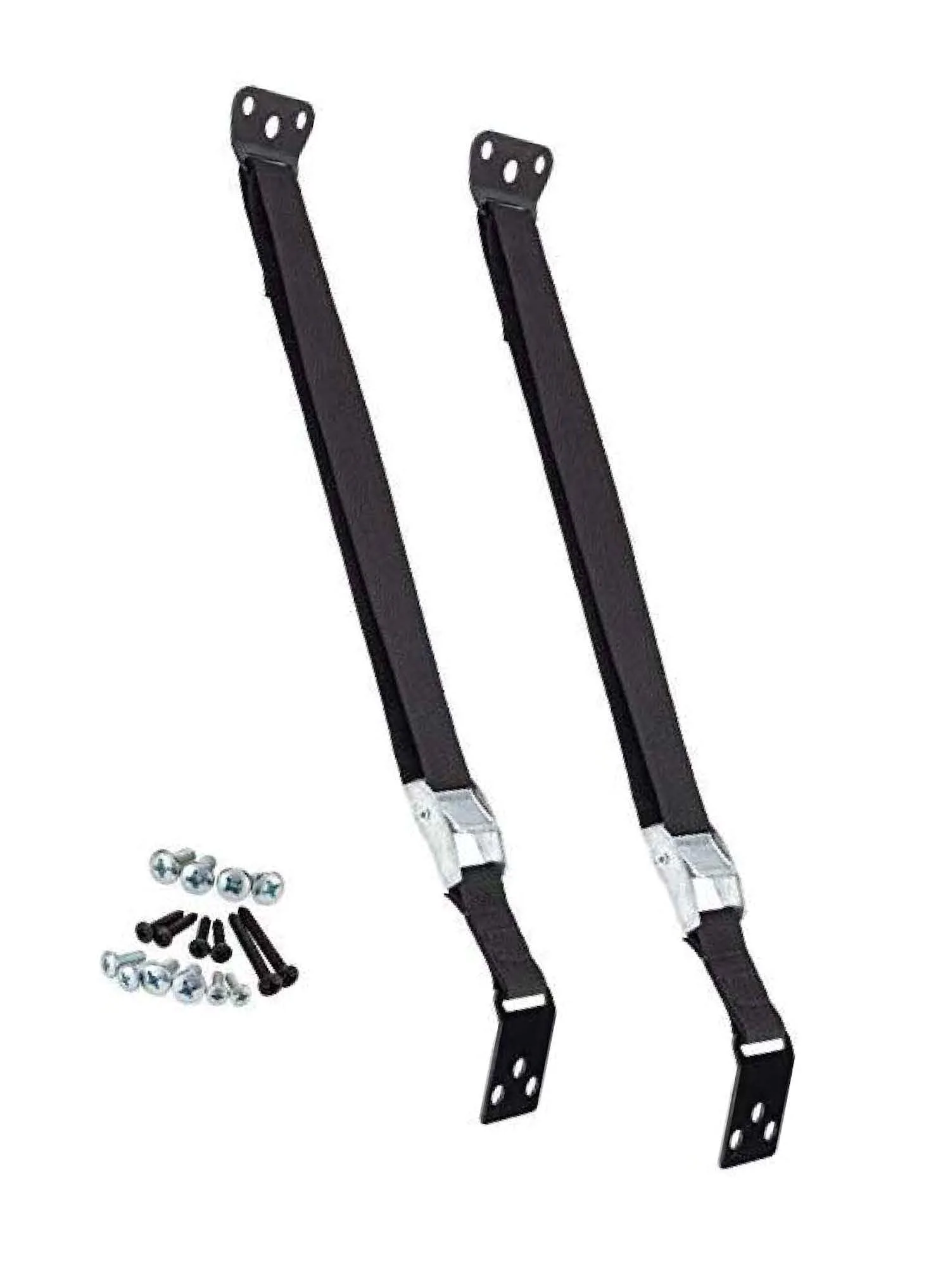
Why tip-overs happen and the risk they pose
A child climbs a low chest of drawers the way an adult uses steps. Drawers that open create a tempting foothold and a shifting center of gravity. Those two facts combine to turn ordinary furniture into a serious hazard. The American Academy of Pediatrics, HealthyChildren.org, reports that a child goes to an emergency department for a furniture or TV tip-over at least once every hour. The same source says 77 percent of fatal tip-overs from 2000 to 2019 involved children under six. Those figures are stark because the events are often predictable.
Toddlers test boundaries by pulling, climbing and exploring. An open drawer encourages climbing and the dresser can pivot forward long before the child reaches the top. Heavier top loads make the shift quicker. Anchoring prevents that pivot. It does not make a home entirely risk free, but it reduces a common mechanism for severe injury.
Simple fixes reduce the most likely scenarios. Keep heavy objects low so a child cannot pull something heavy onto themselves. Avoid placing a TV on a dresser where a child can reach both the screen and the drawers. Use anchored furniture and secured TV stands or wall mounts to take the pivot out of an accident.
Act now when your child begins to open multiple drawers or climb onto furniture. The behavior indicates they are actively testing balance and reach. Taking steps before a close call will make the environment safer while your child learns limits.
What to anchor right away
Anchor everything that can tip. The U.S. Consumer Product Safety Commission Anchor It! campaign says to anchor all furniture with drawers, doors or shelves. That includes dressers, bookcases, tall cabinets, chests, shelving units and media stands. Add TVs to the list. The American Academy of Pediatrics advises storing heavy items in low drawers and not placing a TV on a dresser.
Think about any piece a child could climb, pull or lean against. A short bookcase may seem stable until a toddler stands on a middle shelf. A tall wardrobe with doors can become a step ladder when drawers are open. Even small chests or decorative cabinets can pivot when a child pulls a lower drawer to use as a foothold.
Anchor the furniture to a wall stud whenever possible. For TVs, consider a wall mount rated for the screen or solid straps that attach to furniture and wall studs.
Take a sweep of the room on your knees and from a child’s eye level. You will see items you did not notice from an adult standing height. Move fragile or heavy objects to lower locations and anchor the remaining pieces. Doing so will change the odds in your favor whenever a curious toddler starts to climb.
| Piece of furniture | Anchor with | Watch for |
|---|---|---|
| Dresser | Strap with metal brackets into a stud | Open drawers used as steps |
| Bookcase | Wall brackets or straps to stud | Top-heavy displays or toys |
| TV on stand | Strap TV and stand to stud | TV placed on a dresser |
| Tall cabinet | Metal L-bracket into stud | Doors that children open and climb |
| Freestanding shelf | Two point anchors to studs | Shelves loaded with heavy items |
Finding a stud and choosing exactly where the bracket goes
A secure anchor has one hard connection to the building structure. That usually means a wood stud or masonry behind the wall. A stud finder is the fastest way to locate a stud. You can also find studs by looking for baseboard seams, outlet or switch locations, or by tapping and listening for a solid sound. Mark the stud location at the height where the furniture bracket will sit.
Choose the bracket position so the strap or bracket pulls straight back into the stud. For dressers, place the furniture bracket near the top rear edge where the panel is strongest. Bookcases work well with brackets high on the back or at two levels to prevent rocking.
Inspect the furniture back. Many pieces have narrow rear rails or thin backing that cannot hold a screw. If the backing is not solid, move the furniture so the anchor attaches to a structural rail inside the piece or use a bracket that spreads the load across a wider area of the back. Some furniture has hollow cavities behind the top edge. In those cases attach to the internal frame member whenever possible.
Avoid anchors that rely only on drywall. Drywall can fail under sudden sideways force. If masonry is present use anchors rated for brick or concrete. When in doubt about what is behind the wall, find the stud before you drill. A correct anchor point is the difference between a strap that tugs tight and a strap that lets the furniture pivot.
Fitting a strap, step by step
Follow the same order recommended by the U.S. Consumer Product Safety Commission Anchor It! campaign. First attach the wall bracket into a stud. Then move the furniture close to the wall so the strap will have minimal slack. Next fasten the furniture bracket to the back or frame. Connect the strap between the two brackets. Finally tighten the strap and tug to test the connection.
Start by marking the stud and drilling any pilot hole the bracket requires. Use the screws included with the anchor or ones rated for the installed bracket. Attach the wall bracket so it sits flush and will pull directly into the stud. Bring the furniture to the wall and align the furniture bracket with the mounting point you planned. Check that the bracket sits against solid wood and will not pull through veneer or thin backing.
Our heavy duty straps adjust up to 36 inches and include a metal buckle for tightening. The American Academy of Pediatrics advises using metal brackets rather than plastic where possible. Our straps use metal brackets, hardened steel screws and polypropylene webbing, and the buckle lets you take out the slack.
After tightening, tug the furniture forward with a firm pull. It should not lift from the floor or tip. If the anchor shifts, retighten and recheck the screw locations. Repeat this process for every piece that could tip. One secure anchor per item is the practical minimum. For very tall or heavy units use two anchors spaced vertically.
TVs and TV stands: mount or strap
Flat-screen TVs can be surprisingly heavy. The American Academy of Pediatrics compares some models to one or two bowling balls. That weight, combined with a child climbing onto a stand or pulling a screen forward, can cause a fast and forceful tip-over. A TV mounted to the wall or anchored with metal brackets reduces the chance that a child’s climb becomes an emergency.
Mounting the TV directly to studs with a rated wall mount is the most robust option. The mount should match the TV’s VESA pattern and the wall hardware must be driven into studs or masonry. If a wall mount is not feasible choose heavy duty straps that secure the TV and the stand or the furniture it sits on to a stud. Make sure the strap anchors both the stand and the wall so the entire assembly resists tipping.
Avoid putting a TV on a dresser where drawers become steps. Place TVs on low, stable furniture designed for media equipment or on a fixed mount. Keep remotes, game controllers and tempting objects off the top of the TV stand. Store heavier accessories in lower drawers so the top stays clear.
After installation, test the set with a steady forward pull. The TV and the furniture should not lift or tilt. Check cable management so cords do not become a lever a child can pull. Finally, consider the room layout. A TV that is out of reach and properly anchored is less likely to be involved in a tip-over when a toddler is exploring.
The rest of the room and ongoing checks
Anchoring reduces the immediate risk but it is only one part of a safer room. Secure drawers and cabinets so a child cannot open several at once. Our spring loaded cabinet and drawer latch lets a drawer open about 7/8 inch and is designed for cabinets with a face frame. The gap is enough for an adult finger to press the latch, and too narrow to stand in.
Limit window openings. The U.S. Consumer Product Safety Commission says to limit window openings to four inches or less because screens do not stop children from falling. A simple solution is a window stop or a wedge on a hook-and-loop strip. Our Window Widget uses a plastic wedge on a 7 3/4 inch adhesive hook-and-loop strip so you can set the stop where you need it. These come in 4 and 8 pack options.
Keep heavy items off the tops of furniture and store them in low drawers. Put books, plants and decorative pieces on lower shelves so they are not tempting weights at the edge of a top shelf. Check cords and small objects that could create a pull hazard.
Every so often, tug each strap, bracket and anchor again. Tighten straps that have loosened and replace any worn hardware. Inspect latches and window stops and reapply adhesive or reposition stops as needed. The hardware buys you time. Watching your child is still the job.
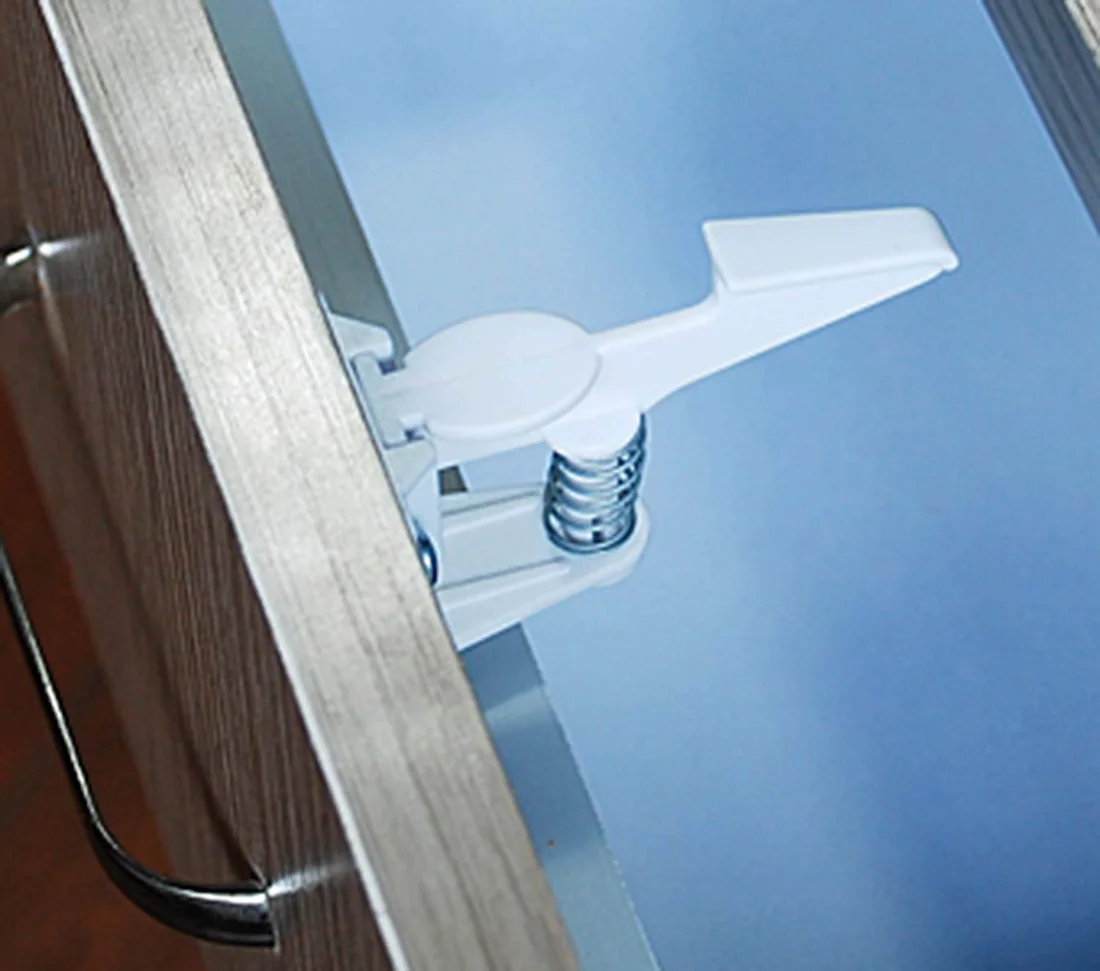
The straps, drawer latches and window stops are part of the people at Safety Innovations.
