
Why outlets come first
A crawling baby sees the room from a new angle. Low walls, baseboards and cords are now at eye level. Small hands find holes to poke and cords to pull. An outlet looks like a toy. That is the practical reason to put outlets near the top of your list when you childproof a room.
The U.S. Consumer Product Safety Commission, in "Childproofing Your Home", notes that outlet covers and outlet plates help prevent electrical shock. The agency also says outlet protectors should not be easy for children to remove and should be large enough that children cannot choke on them. Take those points literally. A decorative cover that a toddler can pop out will not do the job. A tiny insert that could be swallowed is not an option.
Start with a quick sweep of the walls where your baby will crawl, stand and pull up. Note which outlets already have cords plugged in and which sit idle. Anything that sits at or below the height your child can reach deserves attention. Cords running along the floor make an outlet more attractive, because a cord lets the child pull and then explore the plug or the opening.
Think in layers. A locked cabinet or an anchored piece of furniture can reduce the temptation to climb, but they do not protect the electrical contact points. Latches, anchors and window limits help in other parts of the home, and the CPSC recommends several of those measures in the same guidance. Still, an outlet with exposed slots is a direct hazard that you can address with a plate, a box or a set of caps, and each suits a different kind of outlet.
Plates that close themselves
Self-closing outlet plates replace the existing wall plate and have sliding shutters that cover the slots. When a plug is pulled out the shutters slide shut on their own. That motion keeps the receptacle covered without an extra step from you. These plates come in two common shapes. A standard version fits duplex outlets and is held by one center screw. It measures 3 inches wide by 4 3/4 inches high. A Decora version fits rectangular rocker-style outlets and is held by two screws. You can tell which type you have by looking at the face of the plate. If a single round screw sits in the center it is the standard style. If the plate is rectangular with two screws top and bottom it is a Decora style.
Install a self-closing plate with a screwdriver after you switch off power at the breaker. Turning the breaker off reduces risk while you remove the old plate and attach the new one. Tighten the screws securely but do not over-torque. After you restore power test the shutter action by plugging and unplugging a lamp. The shutters should close without sticking.
Self-closing plates are a good fit for frequently used outlets that you want to remain ready for regular plugging and unplugging, like a floor lamp or a playroom lamp. They stay flush with the wall and do not obstruct cords. They do not protect outlets when plugs stay in place. For those situations a box may work better. Check that your outlet type matches the plate you buy, and follow the safety step of switching the breaker off before you touch the wiring or plate.
Outlets where something stays plugged in
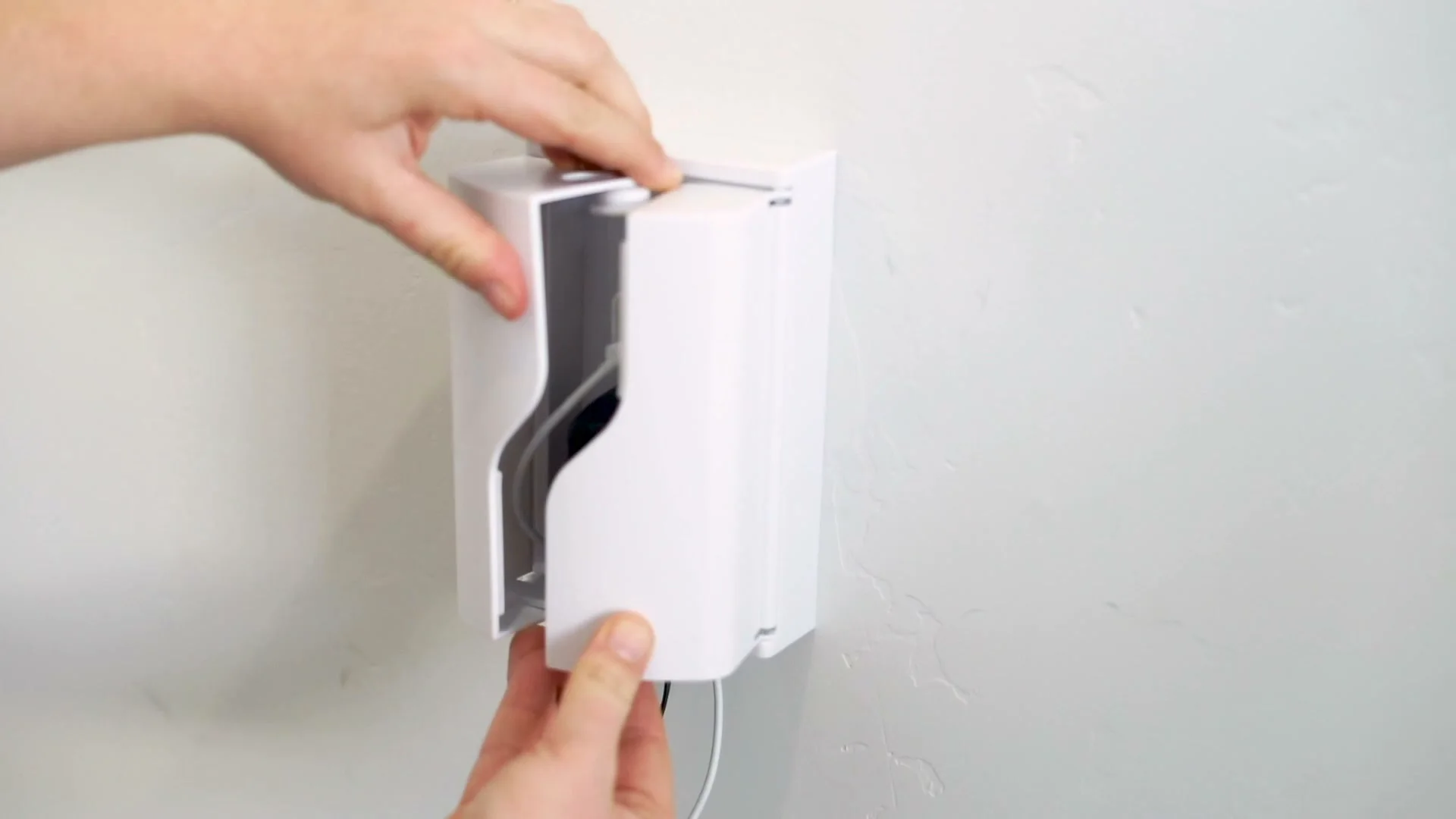
Some outlets always have a plug in them. TV and media centers are common examples. Kitchen counters sometimes have coffee makers or other devices that stay plugged in. For those cases a cover box that encloses the outlet with the plugs in place keeps the contact area protected and still allows cords to run out to the devices.
A Twin Door outlet cover box closes over an outlet even with plugs inserted. The box opens when you press a top and a bottom button together. Inside it measures 5 3/8 inches high, 3 3/16 inches wide and 2 3/4 inches deep. The design lets cords leave through the bottom. Adapter plates for both standard and Decora outlets are included so the box fits the common outlet face styles. If you have a bulky power brick or a wide charger measure that plug against the inside dimensions before you buy. The box will not fit everything.
Boxes like this are especially useful where a plug is permanent or semi-permanent and you do not want the cord to be a temptation on the floor. Use one on an entertainment center where the TV and peripherals stay connected. Use it behind a side table that holds a lamp that is almost never moved. The included adapter plates mean you can fit either the single-center-screw standard duplex or the two-screw Decora style.
Keep in mind the practical checks. Measure the plug head and the space you have behind furniture. Make sure cords route cleanly through the bottom opening so the box sits flush against the wall. Confirm the adapter plate type and the vertical clearance for your cord bundle. If you need to protect a cluster of cords consider bundling and then enclosing them so nothing dangles at a child’s reach.
| Outlet | Best fit | What to check |
|---|---|---|
| Standard duplex outlet | Frequently used outlet where plugging happens often | Single center screw, plate dimensions 3 x 4 3/4 inches |
| Outlet with permanent plug | Situations where a plug stays in place, like TVs | Inside box 5 3/8 x 3 3/16 x 2 3/4 inches, adapter plates included |
| Unused outlet | Outlets you rarely use that sit low | Caps cover all three openings and should be hard for a child to remove |
Caps for outlets nobody uses
Plastic safety caps work when an outlet is not in regular use. A set of clear caps is a low-cost, low-effort option for unused receptacles that sit within reach. The Ultimate outlet safety caps cover all three openings including the ground hole. Each cap has two small holes through it. A pack of 50 lets you cover many outlets around the house.
Caps are best when an outlet is rarely used and you do not want any device plugged in. Examples include spare wall outlets behind furniture, a child-height outlet in a guest room, or an area of the wall that your baby can reach but you seldom need.
The same CPSC guidance that recommends covers also warns that protectors should not be easy for children to remove and should be large enough to avoid choking. That point matters with caps. Do not use a cap that a toddler can wiggle out.
Caps are not ideal where cords must pass through, or where you plug and unplug frequently. For those spots a self-closing plate or an outlet box keeps the outlet protected while staying functional. Also avoid leaving caps in place in areas where furniture shifts and could press them partially out. Periodically check the caps for damage and replace any that look worn.
Switches and tricky circuits
A light switch is often within a crawler’s reach, and some switches control devices that pose extra risk. Garbage disposal switches and basement lights are two examples where a child flipping the switch could cause a hazard. A clear light switch guard covers a toggle or Decora switch and fastens with the existing plate screws. The guard leaves openings at the top and bottom so an adult finger can still reach the switch when needed.
Install a switch guard where a small hand could reach a potentially dangerous circuit. The guard prevents casual flipping while keeping access for an adult. For basement and utility-area switches, lockable doors or securing the entrance adds another layer of control, and the CPSC recommends latches and locks on cabinets and drawers to prevent access to hazards.
Some switches are part of multi-gang plates or live near an outlet. When you put a guard on one switch check that the guard does not interfere with neighboring controls. The same screwdriver installation that works on outlet plates usually handles switch guards. If you have rocker-style Decora switches ensure the clear guard fits that style.
A switch guard is a mechanical barrier. It does not remove the electrical risk behind the wall. If a switch controls equipment that could start a dangerous motion consider moving the control higher on the wall where a child cannot reach it. If you are unsure about altering switch height, consult a qualified electrician rather than improvising.
A room-by-room order you can finish in an afternoon
Start where your baby will spend most time today. In the living room that might mean the outlets around the sofa, TV and any floor lamps. Make a list on your phone or a sticky note. Walk the room and mark each outlet as one of three categories: frequently used, permanently plugged, or unused. Use a self-closing plate for the first category, a box for the second and caps for the third.
Move to the areas your child visits next. Bedrooms often have nightlights, alarm clocks and lamps. Kitchens and bathrooms have counter outlets, often within reach of a child standing on a stool. Hallways and entryways can have low outlets near baseboards that are easy for a crawler to reach. Do not forget the play area and any floor-level power strips. The CPSC notes that when replacing receptacles you should use a tamper-resistant type. That is the replacement choice the agency suggests if you are updating the actual receptacle rather than adding a cover.
Take the stairs seriously. The U.S. Consumer Product Safety Commission advises that for the top of stairs use only gates that screw to the wall. Electrical safety solutions do not substitute for stair gates or other fall-prevention measures. Also follow the advice of the U.S. Consumer Product Safety Commission and other agencies to anchor furniture and TV stands with straps and brackets, and use latches on cabinets where poisons or sharp objects are stored.
A one-afternoon session can make a visible difference. Work methodically, follow the installation steps such as switching off the breaker when you replace plates, and test each solution after installation. If you choose to replace receptacles, consider tamper-resistant outlets as the CPSC recommends. Our outlet products were designed by a professional childproofer and we have sold them since 2008. They take easy access to the slots away, and you keep watching your child.
The plates, the box, the caps and the switch guard are all part of the people at Safety Innovations.
